Every business has roles. A developer writes code. A marketer crafts campaigns. A project manager keeps the trains running. For decades, these roles lived in org charts and Slack channels. Now they live in sandboxes.
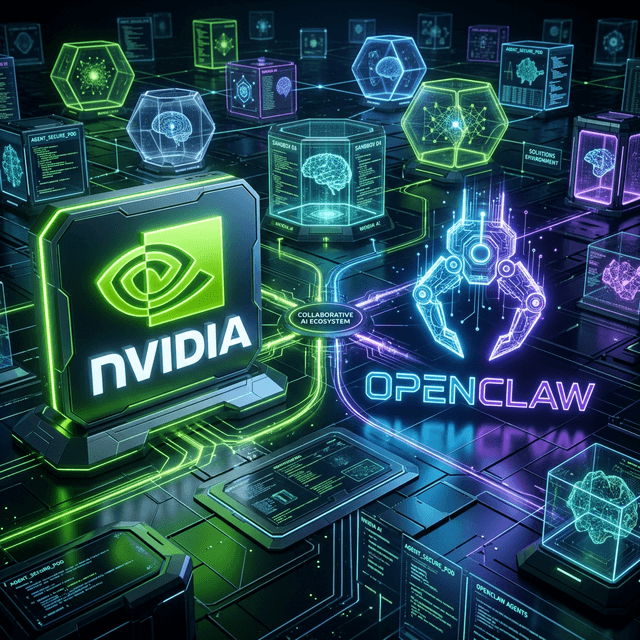
We've been running NVIDIA's NemoClaw — an open-source security layer on top of OpenClaw — to deploy autonomous AI agents, each one purpose-built for a specific function, a specific niche, a specific industry. Not one general-purpose chatbot trying to do everything. Dedicated agents, isolated from each other, each with its own tools, permissions, and expertise.
This is how we're doing it.
The Architecture: One Sandbox, One Role
NemoClaw runs on top of OpenShell, NVIDIA's container-based sandbox runtime. Each agent gets its own isolated environment — its own filesystem, its own network policies, its own inference configuration. Think of it as giving every team member their own secure workstation, except the team member is an AI running Nemotron 120B through NVIDIA's cloud.
The structure looks like this:
NemoClaw Gateway (OpenShell + k3s)
├── sandbox: dev-agent         → Full-stack developer
├── sandbox: marketing-agent   → Content & campaign strategist
├── sandbox: pm-agent          → Project manager & coordinator
├── sandbox: seo-agent         → SEO & analytics specialist
├── sandbox: support-agent     → Customer support & triage
├── sandbox: research-agent    → Market & competitor intelligence
├── sandbox: devops-agent      → Infrastructure & deployment
└── sandbox: copywriter-agent  → Brand voice & editorial
Each sandbox has:
- Scoped network egress — the dev agent can reach GitHub and npm; the marketing agent can reach analytics APIs and social platforms; the support agent can access the helpdesk. No agent can reach what it doesn't need.
- Dedicated tooling — the dev agent has git, node, python, and build tools installed. The copywriter agent has content templates and brand guidelines. No bloat, no confusion.
- Session persistence — each agent maintains context across interactions. The PM agent remembers the sprint backlog. The SEO agent tracks keyword rankings over time.
The Agents We Run
1. The Developer Agent
Sandbox: dev-agent
Industry: Cross-cutting (serves all client projects)
This is the workhorse. It writes code, debugs issues, runs tests, and commits to feature branches. We feed it project specs and it builds. Not prototypes — production code that goes through review.
What makes NemoClaw valuable here: the sandbox enforces that the dev agent can only push to designated repositories. It can't accidentally leak credentials, access production databases, or install unauthorized packages. Every outbound connection is policy-controlled.
Typical task:
openclaw agent -m 'Implement the Stripe webhook handler for subscription events. Use the existing prisma schema. Write integration tests.' --session-id project-x-sprint-4
2. The Marketing Agent
Sandbox: marketing-agent
Industry: E-commerce, SaaS, Local Business
This agent plans campaigns, writes ad copy, analyzes performance data, and generates content calendars. It has access to Google Analytics APIs, social media management tools, and our internal brand guidelines.
The network policy only allows connections to approved marketing platforms — no wandering off to random APIs or data sources.
Typical task:
openclaw agent -m 'Analyze last month performance for the e-commerce client. Generate a content calendar for April focused on the top 3 converting product categories. Include email sequences and social posts.' --session-id ecom-marketing-q2
3. The Project Manager Agent
Sandbox: pm-agent
Industry: Agency operations (CreativDigital internal)
This one tracks tasks, flags blockers, writes status updates, and coordinates between other agents' outputs. It has access to our project management tools and can read (but not modify) the outputs from other sandboxes via shared volumes.
Typical task:
openclaw agent -m 'Review the current sprint board. Identify tasks that are blocked or at risk of missing the deadline. Draft a status update for the client with recommendations.' --session-id sprint-review-w12
4. The SEO Specialist Agent
Sandbox: seo-agent
Industry: Digital Marketing, Content Publishing
Keyword research, technical audits, schema markup generation, competitor analysis. This agent has access to search console APIs and can analyze site structure.
Typical task:
openclaw agent -m 'Run a technical SEO audit on the client site. Check for broken links, missing meta tags, schema markup opportunities, and Core Web Vitals issues. Prioritize fixes by estimated traffic impact.' --session-id seo-audit-client-y
5. The Support & Triage Agent
Sandbox: support-agent
Industry: SaaS, Service businesses
Reads incoming tickets, categorizes them, drafts responses, escalates critical issues. Strict network policies — it can access the helpdesk API and knowledge base, nothing else. No customer data leaves the sandbox.
Typical task:
openclaw agent -m 'Process the unread support tickets from the last 24 hours. Categorize by urgency. Draft responses for common issues. Flag anything that needs human intervention.' --session-id support-daily
6. The Research Agent
Sandbox: research-agent
Industry: Competitive intelligence, Market analysis
This agent monitors competitors, analyzes market trends, and produces briefings. It has broader network access than most (it needs to crawl public sources), but all connections are logged and auditable.
Typical task:
openclaw agent -m 'Research the top 5 competitors in the Romanian e-commerce hosting space. Compare pricing, features, and recent product launches. Produce a competitive analysis brief.' --session-id market-intel-q1
7. The DevOps Agent
Sandbox: devops-agent
Industry: Infrastructure (internal)
Monitors deployments, manages CI/CD pipelines, troubleshoots infrastructure issues. Has access to deployment platforms and monitoring dashboards. Cannot modify production directly — it proposes changes that a human approves.
8. The Copywriter Agent
Sandbox: copywriter-agent
Industry: Content, Branding
Brand-voice-aligned content generation. Blog posts, landing pages, email sequences. Pre-loaded with brand guidelines, tone documentation, and style references. Produces drafts that go through human editorial review.
Why NemoClaw and Not Just "Give Claude a Prompt"
We've used general-purpose AI tools extensively. They're powerful. But for running multiple specialized agents in a business context, three things matter:
1. Isolation is non-negotiable.
When you have an agent that accesses customer data, it cannot share an environment with an agent that browses the public web. NemoClaw's sandbox model enforces this at the container level. Network policies are not suggestions — they're firewall rules.
2. Specialization beats generalization.
A single model trying to be a developer, marketer, PM, and copywriter simultaneously is mediocre at all of them. Giving each role its own sandbox with its own tools, context, and pre-loaded knowledge makes the output dramatically better. The dev agent doesn't need to know about marketing. The copywriter doesn't need git.
3. Auditability matters for client work.
When we deliver work to clients, we need to show what the agent did, what tools it used, what external services it contacted. NemoClaw's policy-controlled egress and OpenShell's logging make this possible. Every action is traceable.
The Stack
| Layer | Technology |
|---|---|
| Inference | NVIDIA Nemotron 3 Super 120B (cloud, via build.nvidia.com) |
| Agent Runtime | OpenClaw (open source, autonomous coding agent) |
| Security Layer | NemoClaw (sandbox policies, network control, audit) |
| Container Runtime | OpenShell (k3s-based gateway, per-agent isolation) |
| Hardware | Standard Linux workstation with NVIDIA GPU (for future local inference) |
| Orchestration | Custom scripts + NemoClaw CLI (multi-sandbox management) |
We're currently running cloud inference through NVIDIA's API, with plans to move latency-sensitive agents to local inference once NemoClaw's local model support matures. The RTX-class GPUs in our workstations will handle the smaller, faster models while complex reasoning tasks stay on cloud.
What's Next
NemoClaw is alpha software. We're early adopters, and that means rough edges. But the architecture is right: Kubernetes-based gateway, policy-enforced sandboxes, pluggable inference providers. The foundation is built for multi-agent orchestration even if the tooling isn't fully there yet.
What we're building toward:
- Inter-agent communication — the PM agent delegates tasks to the dev agent, reviews output from the copywriter agent, and reports to humans. A coordination layer where agents work as a team, not as isolated silos.
- Automated pipelines — a client request triggers the research agent, which feeds the marketing agent, which feeds the copywriter, which delivers a campaign. Human approval at each gate, but the flow is automated.
- Industry-specific agent templates — pre-configured sandboxes for common roles in e-commerce, SaaS, hospitality, real estate. Deploy a "Digital Agency Agent Team" with one command.
- Local inference for privacy-critical workloads — agents handling sensitive client data run entirely on-premises, no cloud calls. NemoClaw + local Nemotron on RTX hardware makes this feasible.
The Bottom Line
The shift isn't from "no AI" to "AI." It's from "one AI doing everything" to "specialized AI agents doing specific jobs." NemoClaw gives us the security and isolation layer to make this practical in a business context — not as a demo, not as a proof of concept, but as the way we actually deliver work.
Every sandbox is a team member. Every policy is a job description. Every agent earns its keep.
If you want specialized agents like the ones described above (support, research, DevOps, copywriting) configured for your company, that is exactly what we deliver through our autonomous AI agents service — with isolation, specialization and auditability as core principles.
CreativDigital.ro is a digital agency based in Romania specializing in web development, digital marketing, and AI-integrated business solutions. AIAutonom.net is our dedicated AI automation practice, focused on deploying autonomous agent systems for business operations.
NemoClaw is open-source alpha software by NVIDIA. Our usage represents early experimentation and forward-looking architecture decisions. Results and capabilities will evolve as the platform matures.