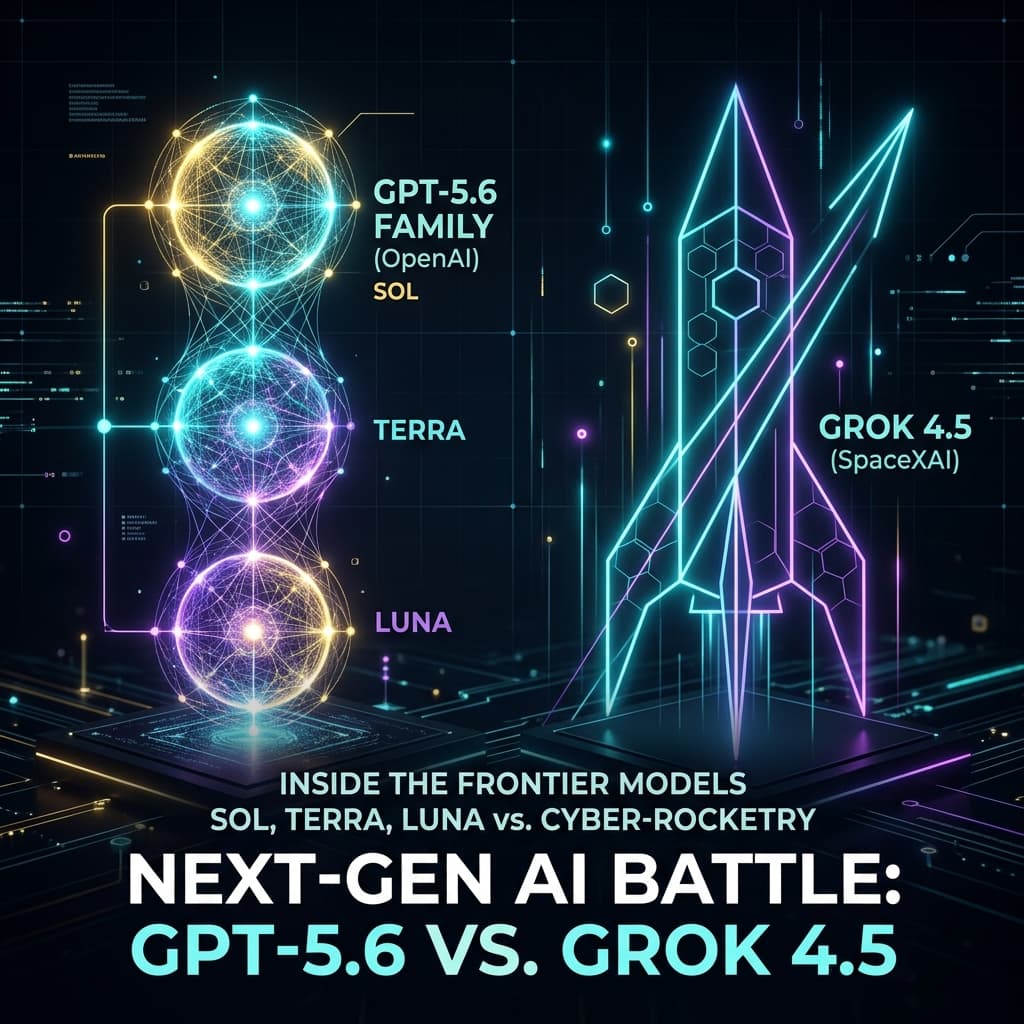
OpenAI’s most advanced model family, GPT‑5.6, is now set for a broad global release on Thursday, July 9, 2026, after the U.S. Department of Commerce approved a wider rollout of the Sol, Terra, and Luna models. The company initially kept GPT‑5.6 in a limited preview, offering access only to a small group of vetted partners whose details were shared with federal authorities.
That early phase began on June 26, when OpenAI delayed a full public launch at the U.S. government’s request and agreed to restrict GPT‑5.6 to roughly 20 trusted organizations while officials tested the model. During this period, OpenAI engineers stayed in Washington to support the review, and access was effectively gate‑kept on a customer‑by‑customer basis. Now that the Commerce Department’s Center for AI Standards and Innovation (CAISI) has completed its testing, OpenAI says GPT‑5.6 will launch publicly and that preview access is already expanding globally.
A three‑model family: Sol, Terra, and Luna
GPT‑5.6 is not a single model, but a family built around three tiers: Sol, Terra, and Luna.
- Sol is the flagship “frontier” model, aimed at complex tasks like advanced coding, research, and difficult reasoning problems, and is described as OpenAI’s most advanced and most expensive option.
- Terra targets everyday high‑volume workloads, trading some peak capability for better cost efficiency per token.
- Luna is designed for speed and affordability, giving developers a fast, cheaper model for simpler or latency‑sensitive tasks.
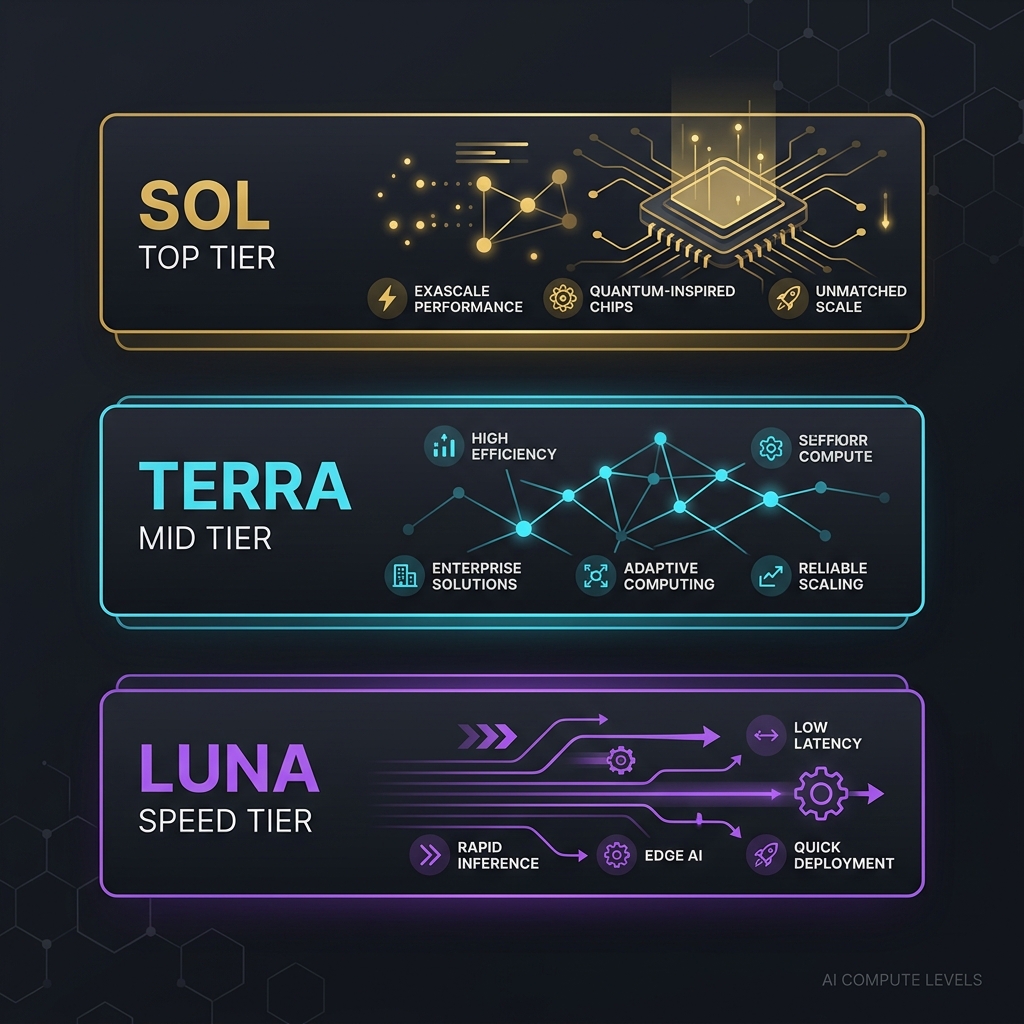
Pricing reflects this segmentation: multiple sources report Sol at roughly $5 per million input tokens and $30 per million output tokens, Terra at $2.50 / $15, and Luna at $1 / $6. OpenAI has also previewed more advanced “reasoning” options and an “ultra” mode that coordinates sub‑agents on complex workloads, aiming at long‑horizon planning and agentic workflows rather than just single‑prompt chat.
Capabilities: coding, science, cybersecurity, and bio‑risk
OpenAI positions GPT‑5.6 Sol as a next‑generation model with stronger performance in coding, scientific reasoning, and cybersecurity compared with previous releases. Benchmarks reported by independent evaluators highlight improvements on coding and agentic task suites, as well as better behavior on secure bio‑related tests. At the same time, several governance and evaluation groups flag GPT‑5.6 as “frontier” and “use with caution,” noting that safety documentation is still catching up with the model’s capabilities.
This is why the federal review mattered: U.S. officials sought early access to frontier models like GPT‑5.6 to probe cyber‑attack scenarios and potential military misuse before the systems reached general availability. The Commerce clearance therefore signals not just that GPT‑5.6 is ready for broader use, but that it has passed an initial round of government‑led stress‑testing under the new oversight framework.
A new regulatory template for frontier AI
The GPT‑5.6 story is also the first live test of President Trump’s June executive order on AI and cybersecurity, which created a voluntary path for developers to submit “covered frontier models” for up to 30 days of federal review. Under that framework, OpenAI agreed to a staggered release in which federal cybersecurity teams could examine GPT‑5.6 before the model reached the wider market.
Commentary from policy and industry observers suggests this is quickly becoming a de facto pattern for frontier AI launches: restricted preview to vetted partners, federal review focused on high‑risk capabilities, and only then a broad public rollout. This approach contrasts with previous cycles where major models were simply “turned on” for the public, and raises questions about how smaller labs and non‑U.S. developers will be treated as oversight norms harden.
Musk’s Grok 4.5 lands on the same day
While OpenAI prepares GPT‑5.6 for global launch, Elon Musk’s AI venture—rebranded as SpaceXAI in some reports after spinning out from xAI—is lining up its own release for Thursday, 09.07.2026. Musk has said on X that Grok 4.5 will be “Opus‑class,” promising faster performance, better token efficiency, and lower costs than earlier Grok versions.
Grok 4.5 follows a private beta deployed inside SpaceX and Tesla, where the model reportedly powered coding and infrastructure workflows before any public API access was offered. By bringing Grok 4.5 to the wider public on the same date that GPT‑5.6 goes global, SpaceXAI is effectively positioning itself in the same frontier model race—competing on speed, cost, and developer experience rather than raw parameter count alone.
Why Thursday, 09.07.2026 matters for AI builders
Taken together, the public launches of GPT‑5.6 and Grok 4.5 on Thursday, 09.07.2026 mark a pivot point in how frontier AI reaches developers and organizations. On one side is OpenAI’s government‑mediated rollout, shaped by cybersecurity tests and a voluntary oversight framework; on the other is Musk’s push to ship an Opus‑class Grok model that competes directly for high‑end workloads.
For teams building products on top of large language models, the practical impact is straightforward: more choice at the top end of the capability spectrum, alongside clearer signals that advanced models will increasingly pass through some form of regulatory or export‑style review before you can plug them into production systems. That combination—faster models, more nuanced safety debates, and staggered access—defines the reality of frontier AI as of mid‑2026.