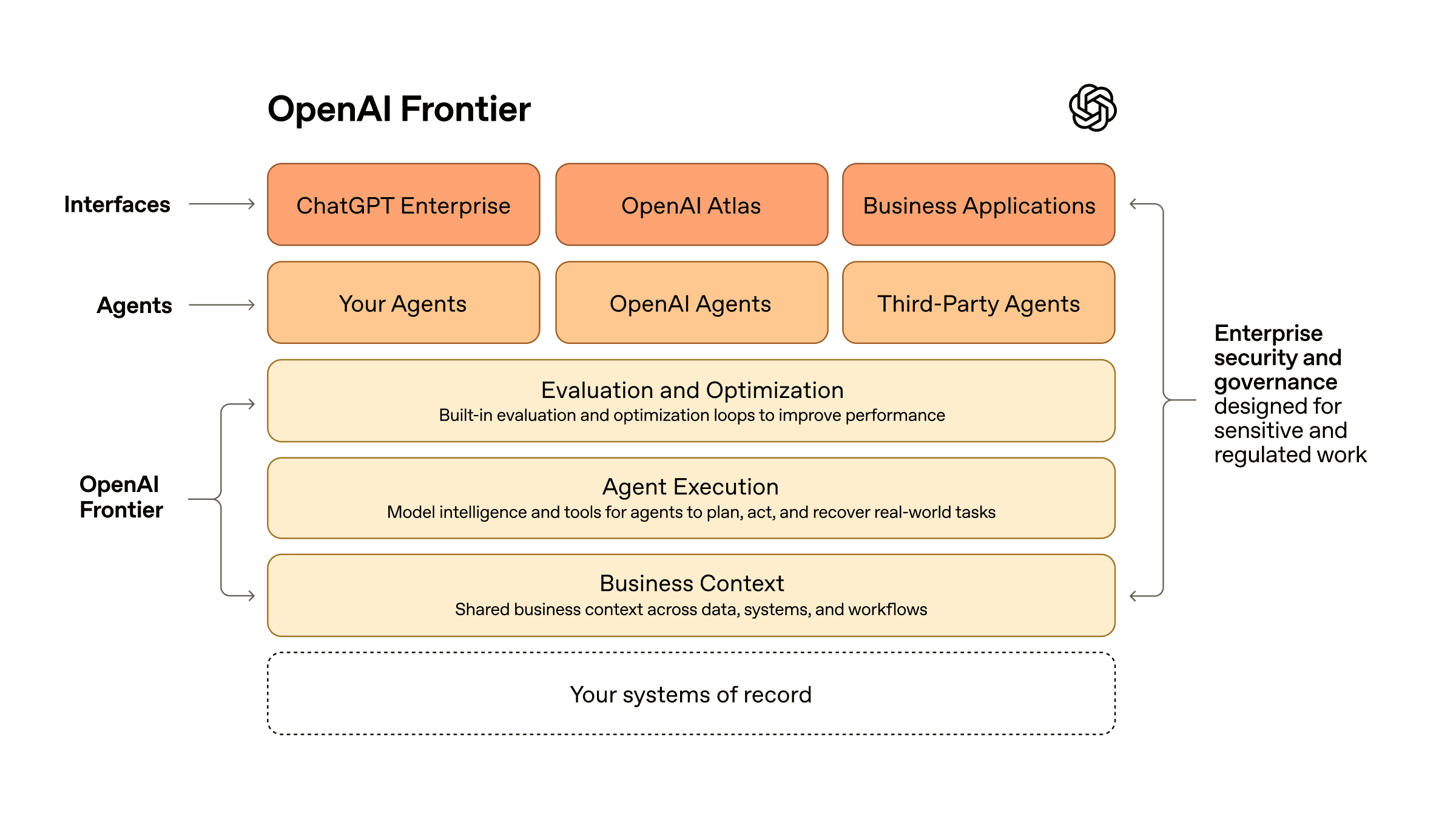
In 2024 and 2025, companies focused on integrating AI copilots that helped employees write emails, summarize meetings, or generate code. In 2026, the paradigm shifts to Agentic AI.
We are no longer talking about tools that wait for human input. We are talking about systems with agency: the ability to perceive context, reason about steps required to achieve objectives, and act autonomously using digital tools (browsers, APIs, databases).
This guide is CreativDigital's full blueprint for understanding and implementing a digital workforce in your organization.
Executive Summary
- Massive ROI: companies adopting agentic AI report major cost reductions on complex repetitive processes.
- Autonomy: 2026-generation agents can handle exceptions and improve from errors without blocking workflows.
- Multi-agent systems: the strongest outcomes come from orchestrated specialist teams (researcher → writer → reviewer).
1. What is Agentic AI? Definition and architecture
Unlike a standard LLM that predicts next tokens, an AI agent is a system built around four core pillars:
1.1. Cognitive profile (the brain)
The LLM remains core, but is used for reasoning, not only text generation. The agent receives an objective (for example: "find low-cost paper suppliers in Europe and request offers") and decomposes it into logical sub-tasks.
1.2. Memory (context)
- Short-term memory: records steps executed in current session.
- Long-term memory: uses vector databases (RAG) for company policies, interaction history, and retained organizational knowledge.
1.3. Planning (reasoning)
Real-time plan adaptation:
- Reflection: "Supplier API X failed. Try alternative method or fallback provider."
- Self-critique: validate output before presenting to user.
1.4. Tool use (execution)
This is action layer. 2026 agents include digital hands:
- Web browsing for research.
- Code execution for data analysis scripts.
- Software integration with CRM (Salesforce), ERP (SAP), collaboration tools (Slack).
2. Three-level agent framework
In practical implementations, we classify agents into three autonomy tiers:
| Level | Agent type | Description | Example use case |
|---|---|---|---|
| L1 | Task Agent | Executes one linear task with limited tools | "Check competitor prices daily and update spreadsheet" |
| L2 | Orchestrator | Coordinates multiple task agents and routing decisions | "Manage onboarding: account setup, contracts, training scheduling" |
| L3 | Autonomous Agent | Defines path independently for broad objective | "Increase organic traffic by 20% in Q3" |
3. Technology stack for 2026
Orchestration and frameworks
- LangGraph (LangChain): industry standard for cyclical multi-step flows.
- Microsoft AutoGen: ideal for agent-to-agent collaboration models.
- CrewAI: high-level framework for fast multi-agent prototyping.
Intelligence layers
- GPT-5 / Claude 4 Opus: frontier models for deep reasoning (especially orchestrators).
- Llama 4 fine-tuned: efficient open-source options for L1 task agents with on-prem control.
Interface and monitoring
- LangSmith: debugging and agent trace visibility.
- Vercel AI SDK: smooth integration into React/Next.js interfaces.
4. Use cases with immediate value
4.1. Autonomous customer support (Tier 1 and 2)
A modern support agent can:
- Check order status in database.
- Detect delay cause.
- Apply policy-based compensation.
- Trigger refund and personalized customer communication.
All in under a minute, with human escalation only when needed.
4.2. Supply chain and logistics
Agents monitor weather, geopolitical updates, and inventory signals. When supply risk appears, they proactively identify alternatives and alert managers only for final approval.
4.3. Software development (DevAgents)
Engineering teams use agents for:
- Automated QA test generation and execution.
- Automatic documentation updates from code diffs.
- Legacy code migration and modernization assistance.
5. Implementation guide: first steps
Step 1: identify high-fit processes
Target tasks that are:
- High volume
- Rules-based with exceptions
- Data-rich across multiple systems
Step 2: prototype in human-in-the-loop mode
Start with approval gate:
- Agent proposes action.
- Human approves/rejects.
This stage is critical for trust, data capture, and quality tuning.
Step 3: gradual autonomy release
As error rates drop, increase autonomous action limits gradually (for example raising allowed refund threshold).
6. Governance and safety
Agent autonomy increases risk if unmanaged.
Mandatory controls:
- Budget caps: strict token/cost limits per session.
- Human override: immediate global stop controls.
- Action whitelisting: read broad, write only in approved systems/tables.
7. Future trajectory: toward AGI?
Agentic AI is often viewed as final practical step before AGI-like systems. In the next 3 years, we expect more tool-inventing behavior and coordinated agent swarms for complex tasks.
Are you ready?
CreativDigital builds exactly these systems through our autonomous AI agents service — on our own platform, with the human-in-the-loop approach described above. Start with our AI automation guide for companies or identify your first high-fit process in a free consultation.
Note: This article is part of our 2026 technology foresight series. Images are digitally generated to illustrate abstract concepts.