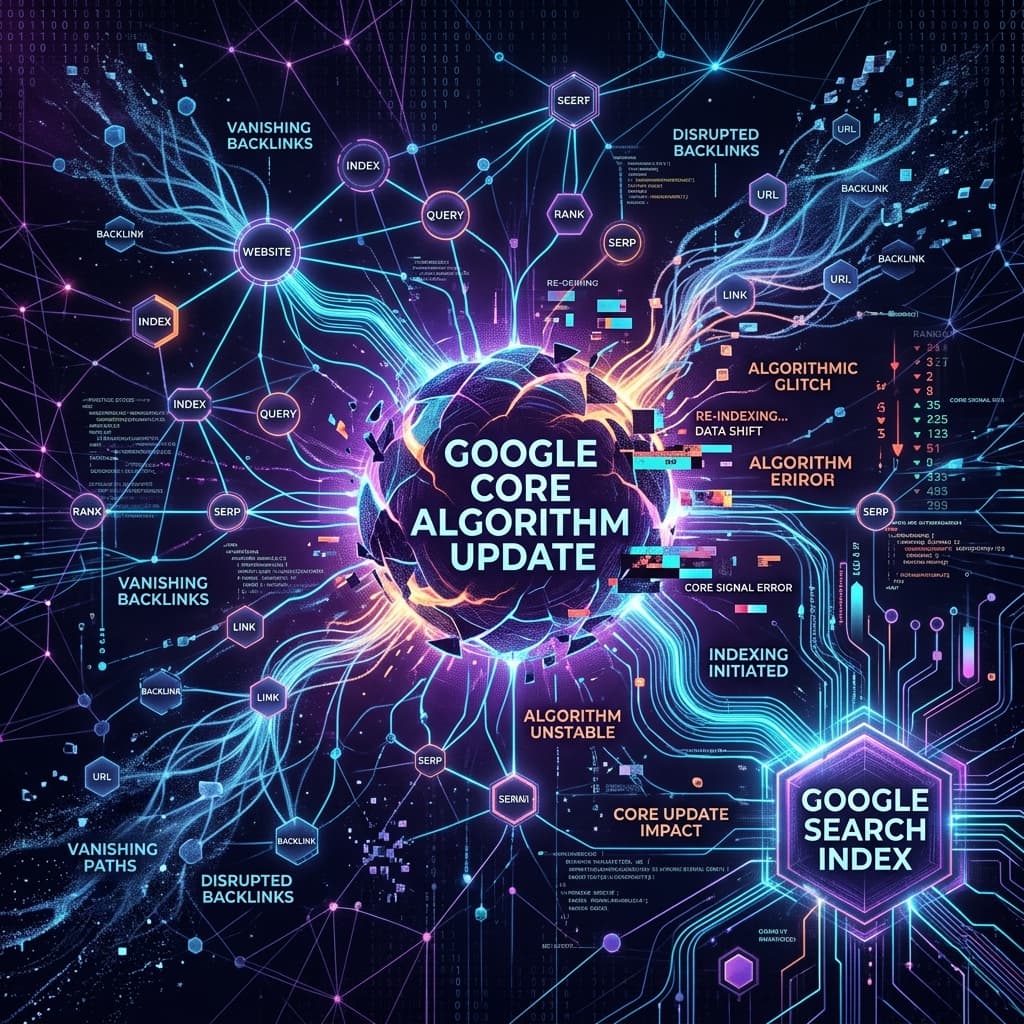
Google has officially initiated the rollout of its May 2026 Core Update, marking the second major core algorithm shift of the year. While Google states this is a standard deployment designed to better surface relevant, human-centric content over a projected two-week timeline, the launch has arrived alongside severe data volatility.
Simultaneously, SEOs and system engineers globally are reporting an unprecedented phenomenon: backlink profiles are completely disappearing or showing "No Data" within tracking ecosystems. Google has formally acknowledged this tracking anomaly under Search Status Incident ID: wdAXJk6LRRihEjpzEeWE (as tracked on the Google Search Status Dashboard and addressed by @googlesearchc).
Technical Diagnosis: Reporting Bug vs. Algorithmic Filtering
When backlink metrics collapse overnight during a core update rollout, engineers must distinguish between a failure in the reporting pipeline and a deliberate algorithmic modification to the link graph.
1. The Reporting Pipeline Bug (High Probability)
Google Search Console (GSC) infrastructure is highly decoupled; the systems that calculate search rankings run separately from the data logging pipelines that populate user dashboards. Google only recently resolved a massive, 11-month GSC impressions logging bug in April 2026.
The total erasure of both external and internal link data currently being reported points strongly to a data pipeline or UI rendering failure under Incident wdAXJk6LRRihEjpzEeWE. If internal link architectures are showing as missing, it is a parsing anomaly rather than a penalty.
2. Real-Time Link Graph Pruning (Medium Probability)
Alternatively, this drop could be the visible payload of mid-May updates to Google’s synthetic-language filters and AI-driven quality layers. Google’s SpamBrain and semantic models have increasingly shifted toward neutralizing links that fail to provide measurable "Information Gain."
Boilerplate directory structures, automated guest posts, and low-tier contextual footprints are being structurally devalued in real time. While an aggressive algorithmic purge could collapse external link counts, it would rarely zero out internal site link counts cleanly.
Scientific Mitigation Strategy: What to Do Right Now
Altering a website’s architecture or link strategy while a core update is actively rolling out introduces confounding variables, rendering accurate root-cause analysis impossible. Follow this systematic validation protocol instead:
Step 1: Isolate Ranking Performance from Reporting Data
Do not rely on the GSC Links report to gauge site health. Open the GSC Performance Report and analyze organic clicks, impressions, and average position trends over the last 48 hours.
- Scenario A: Link reports are empty, but organic traffic, impressions, and indexed URL counts remain stable.
Diagnosis: This confirms a pure reporting glitch under the current live status incident. Your underlying link graph equity is intact. - Scenario B: Link data is missing, and organic visibility is plummeting systematically.
Diagnosis: Your site is experiencing volatility from the Core Update itself, likely due to content quality shifts or systemic trust re-evaluations, rather than a mechanical link removal.
Step 2: Conduct Differential Ingestion Audits
Cross-reference Google’s reporting layer with independent web crawlers (Ahrefs, Semrush, or Majestic) to verify the physical existence of your backlinks.
- Run a crawl on your top referring domains to ensure they haven't implemented spontaneous noindex or robots.txt blocks.
- If independent bots confirm that your external citations and internal hierarchies are physically live and crawlable, the breakdown exists strictly inside Google's internal indexing or dashboard aggregation pipelines.
Step 3: Maintain System Stability
- Do not touch the Disavow Tool: Mass-disavowing links out of panic will cause irreversible damage if those links are currently valid but merely failing to render in a broken GSC report.
- Freeze structural URL updates: Avoid modifying your site’s internal linking schema or changing internal redirect rules until the core update concludes and Incident wdAXJk6LRRihEjpzEeWE is resolved.
The Reality of SEO in 2026
Traditional backlink volume continues to lose its efficacy as a primary vector for visibility, especially as search engines shift space toward generative AI overviews and entity-based relationship modeling. However, a structural wipeout of your entire link database is an infrastructure failure, not an SEO penalty.
Monitor the official Google Search Status page for updates on the pipeline fix before executing any recovery protocols.
And if your own data tells you that what you actually need is a healthier link profile — not more links, but links with real information gain — see our white-hat link building service or request a free SEO audit to find out where you really stand.